

The price tag on the box isn't the price you'll actually pay
Scroll through any "best AI recorder" comparison and you'll see the same numbers pop up: $99 here, $199 there, "free app" plastered across another. It's tempting to just pick whatever looks cheapest on day one. But that sticker price is only half the story — sometimes less than half.
Most AI recorders and notetaking apps don't make their real money on the hardware. They make it on the subscription that kicks in once your free tier caps out. Subscription costs add up over time. A device that looks $50 more expensive upfront can end up saving you money by year three — or vice versa, if you're not paying attention to what happens after month one.
This isn't a "which recorder is best" post. It's a "what will this actually cost you" post — because those are two very different questions.
Quick Comparison: 1-Year vs 3-Year Cost
Scenario A — Core transcription (light use, within free/base tier limits, ~300 min/month, no speaker ID, integrations, or advanced export)
|
|
HiDock P1
|
PLAUD (Starter plan)
|
Otter.ai (Basic plan)
|
|
Device price
|
$169
|
$159
|
$0 (software only)
|
|
Plan fee
|
$0/mo — included
|
$0/mo (300 min/mo free)
|
$0/mo (300 min/mo free)
|
|
1-year total
|
$169
|
$159
|
$0
|
|
3-year total
|
$169
|
$159
|
$0
|
Scenario B — Core transcription at approximately 600 minutes per month, individual use, annual billing, no advanced-feature requirement
|
|
HiDock P1
|
PLAUD Note + Pro
|
Otter Pro
|
|
Device price
|
$169
|
$159
|
$0
|
|
Annual plan
|
$0
|
about $100
|
about $100
|
|
1-year total
|
$169
|
about $259
|
about $100
|
|
3-year total
|
$169
|
about $459
|
about $300
|
Expected replacement cost is assumed to be $0 during the three-year period for all three products.
This defined scenario supports a precise, scenario-bound conclusion: Otter is cheaper in year one, while HiDock is cheaper by year three, for an individual user recording roughly 600 minutes a month who doesn't need speaker ID, extra templates, or advanced export/integration options. Those advanced-feature needs are discussed separately below, since HiDock, PLAUD, and Otter don't bundle identical feature sets at identical price points.
Prices checked September 17, 2026. US list prices, excluding taxes, shipping, promotions, and optional add-ons. TCO is calculated using the specific usage scenario and billing cycle shown above. PLAUD and Otter.ai each offer a free tier with 300 transcription minutes/month, so their recurring fee is not a flat $9–$21/month in every scenario. Zoom's AI Companion features are bundled with eligible paid Zoom Workplace plans rather than sold as a standalone transcription subscription, so it has been left out of the matched comparison above.
What actually goes into "cost of ownership"
When people compare recorders, they usually stop at the price on the product page. Total cost of ownership means looking at everything that follows that first purchase:
- Device price — the one-time cost, if any
- Plan fees — monthly, annual, or pay-as-you-go, and what happens when you outgrow the free tier
- Usage-based charges — per-minute or per-month limits that may require an upgrade to continue
- Storage / export costs — cloud storage or export-format fees once your notes pile up
- Expected replacement costs — battery life and hardware wear over the ownership period
- Multi-device or seat licensing — costs that multiply if you're outfitting a team
Skip any of these in your math and your "cheap" option can quietly become the expensive one.
Year 1 breakdown
At the one-year mark, subscription models can genuinely look competitive. A $9/month plan runs $108 for the year — actually cheaper during the first year than a $169 device. If you're testing the waters or only need a recorder for a short-term project, this is where subscriptions make their best case.
The catch: most subscription tiers that cheap come with tight transcription caps. Go over 300 minutes a month — easy to do if you're in back-to-back meetings — and an upgrade may be required to continue beyond the included limit.
Year 3 breakdown
In the defined Scenario B (individual, ~600 min/month, annual billing, no advanced features), HiDock overtakes Otter's lower year-one cost by year three: $169 total for HiDock versus about $300 for Otter and about $459 for PLAUD Note + Pro.
Three years is a realistic hold time for a piece of hardware you use daily. Whether that favors HiDock or a subscription depends on which scenario — core or advanced — matches your actual usage.
The hidden cost traps
A few things that don't show up in the pricing page but show up on your bill:
- Usage-based overage charges — per-minute fees once you pass your plan's included limit
- An upgrade may be required to continue beyond the included limit — your usage grows and your bill can follow, depending on the provider's policy
- Price hikes after intro periods — the rate you signed up for isn't always the rate you keep
- Data access after cancellation — export options, storage limits, and post-cancellation access vary by provider. Check each service's retention, export, and account-downgrade policy before subscribing.
For HiDock: recordings stay locally on the P1 device (holding roughly 1,000 hours) until you choose to sync; once synced, recordings and transcripts are processed and stored in the HiNotes cloud environment.
Where HiDock P1 fits
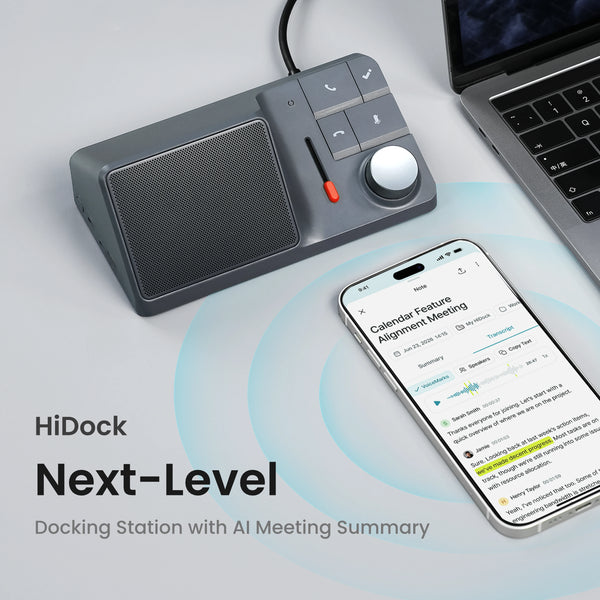
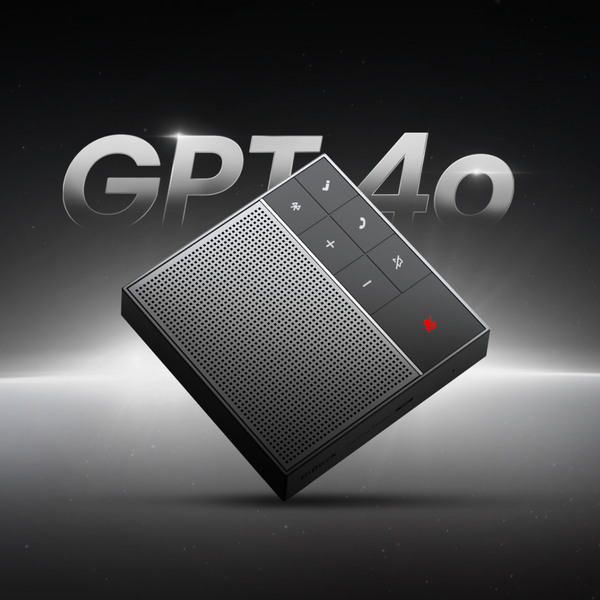
This is exactly the gap HiDock P1 was built to close. One $169 payment covers core transcription and summaries for the life of the device — speaker identification, 39+ customizable templates, extra integrations, additional export formats, and Live Transcription are part of the optional HiNotes Pro or Unlimited plans.
- Unlimited core transcription in 75 languages, free for the life of the device via the HiNotes Member plan — no monthly cap on core transcription
- Advanced features (optional) — speaker ID, 39+ templates, and broader export/integration options are available via HiNotes Pro ($12.99/1,200 min or $99.99/12,000 min) or Unlimited ($199/yr)
- BlueCatch™ technology lets you record both sides of a call while still listening privately through your Bluetooth earbuds — no speakerphone, no awkward "let me put you on speaker"
- USB-C rechargeable, with a 600mAh lithium-polymer battery and room for approximately 1,000 hours of recordings
- Local storage plus HiNotes integration for AI summaries, so your notes don't disappear if you ever stop using an app
For users who regularly exceed free transcription limits and don't need paid advanced features, HiDock P1 may offer a lower three-year TCO. Occasional users may spend less on a free software plan.

Who should still consider a subscription model
To be fair — subscriptions aren't a bad deal for everyone. If you only need a recorder occasionally, a monthly plan you can cancel anytime may cost less overall than buying hardware you rarely use. Teams that need shared cloud workspaces, live collaborative editing, or deep integrations with project management tools may also get more value from a software platform than a standalone device. TCO math should match your actual usage pattern, not just the lowest number on a chart.
How to calculate your own TCO
A simple framework you can apply to any recorder you're considering, whether it bills monthly, annually, or pay-as-you-go:
Device price + required plan fees over the selected period + usage-based charges + storage/export costs + expected replacement costs = Total Cost of Ownership
Run that formula for 1 year and again for 3 years to see which model fits how you actually use the device.

Frequently Asked Questions
Does HiDock P1 really have no subscription?
Correct — core transcription and note features are included free for the life of the device via the HiNotes Member plan, with no monthly plan required. Advanced features like speaker ID and extra templates are optional paid add-ons.
What happens if I record more than expected in a month?
Core transcription on P1 has no monthly minute cap, so there's no overage fee for standard use.
Is "free forever" transcription lower quality than paid tiers elsewhere?
No — HiNotes does not list a separate lower-quality transcription tier for Member users; paid plans mainly add advanced features and usage options such as speaker ID and additional templates.
Do subscription-based recorders ever get cheaper over time?
Not always — annual billing, free tiers, and promotions can lower effective cost. But list prices for paid tiers have generally trended upward, so it's worth checking current pricing before committing long-term.
What if I only need a recorder for a few months?
A free or low-cost subscription plan may cost less than the P1's upfront price for a short window — TCO math tends to favor a one-time purchase the longer you hold onto it.
Can I still access old notes if I switch recorders later?
Export options, storage limits, and post-cancellation access vary by provider — check each service's retention and export policy before subscribing. For HiDock, recordings synced to HiNotes remain accessible in your account, though long-term access is subject to the account, storage, retention, and export policies in effect at the time. Unsynced recordings remain on the physical device.
The Bottom Line
Sticker price tells you what you'll pay on day one. Total cost of ownership tells you what you'll actually pay by the time you've used the thing long enough for it to matter. Run the 3-year math before you buy — not just the 1-year math. For users who regularly exceed free transcription limits and don't need paid advanced features, a one-time purchase like HiDock P1 usually comes out ahead of a recurring subscription. Occasional users may still do better on a free plan.