



Meet Sarah, a senior project manager who spends her days juggling client calls on Zoom, in-person brainstorming sessions, and quick alignment syncs while commuting. Like many professionals in 2026, Sarah found herself struggling with a common dilemma: keeping up with the rapid pace of conversations while simultaneously trying to document crucial action items, deadlines, and nuanced feedback. If she focused entirely on participating, her notes suffered. If she focused too heavily on taking meticulous notes, she lost the natural flow of the conversation.
For a long time, the solution was either hiring an assistant or inviting an AI meeting bot into every virtual call. However, AI bots often introduce their own problems. They can make participants feel self-conscious, raise privacy concerns, and are entirely useless when taking a traditional phone call from a busy coffee shop.
This is exactly why dedicated AI voice recorders have transitioned from niche gadgets to essential productivity tools. By combining portable hardware with sophisticated AI transcription and summarization features, these devices promise to eliminate the friction of manual note-taking entirely.
Two of the most prominent devices leading this category in 2026 are the HiDock P1 and the Plaud Note Pro. Both devices promise to revolutionize how we capture information, but they approach the problem from fundamentally different design philosophies.
While the HiDock P1 is our flagship product, we understand that choosing the right AI voice recorder requires an honest, objective evaluation of how each device fits into different workflows. In this detailed comparison, we will evaluate the HiDock P1 against the Plaud Note Pro across design, recording capabilities, software features, and long-term pricing to help you determine which device is the best fit for your needs.
Table of Contents
1. Our Testing Methodology
2. Quick Specifications Comparison
3. Design and Portability
4. Recording Capabilities and Versatility
5. Noise Cancellation Technology
6. Transcription Accuracy and AI Features
7. Live Translation Capabilities
8. App Ecosystem and Workflow Flexibility
9. Pricing and Long-Term Value
10. Who Should Buy Which Device?
11. Frequently Asked Questions (FAQ)
12. The Bottom Line
Our Testing Methodology
To ensure this comparison is objective, we evaluated both the HiDock P1 and the Plaud Note Pro in real-world environments that mirror modern professional life:
- The Coffee Shop Test: Taking standard phone calls and Zoom meetings from a noisy café to test background noise cancellation.
- The Conference Room Test: Placing both devices in a meeting room with five participants to evaluate omnidirectional audio capture.
- The Commute Test: Recording spontaneous voice memos while walking down a busy street.
- The Multilingual Test: Utilizing both devices during a mixed-language conversation to test transcription accuracy and real-time translation capabilities.
Quick Specifications Comparison
Before diving into the detailed evaluation, let us look at how the HiDock P1 and Plaud Note Pro compare on paper. Their specifications clearly reflect their different intended use cases.

Design and Portability
When evaluating an AI voice recorder, it helps to separate two questions: Is the device well-designed for its intended use? And how easy is it to carry around?
Design
The Plaud Note Pro is an engineering marvel in terms of miniaturization. Measuring just 0.12 inches thick and weighing a mere 30 grams, it is roughly the size of a standard credit card. Its primary design feature is MagSafe compatibility, designed to snap effortlessly onto the back of an iPhone. It features a sleek 0.95-inch AMOLED InstantView Display, providing immediate visual feedback on recording status. For users whose workflow centers on their smartphone , taking calls on the go, and recording in-person conversations with the phone on the table, the Plaud Note Pro's design is purpose-built and elegant.
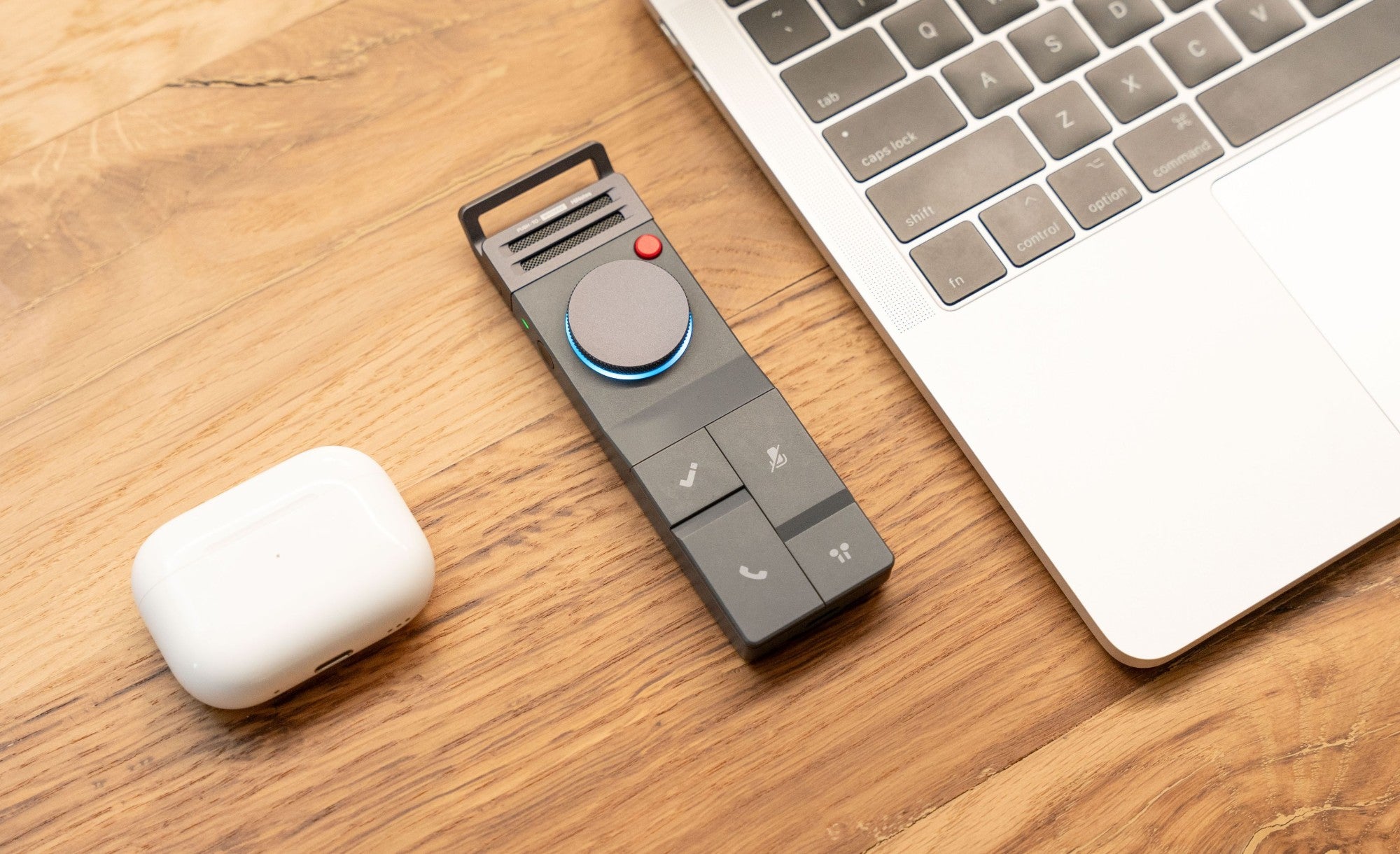
The HiDock P1 takes a markedly different approach. It is engineered as a hybrid device that bridges the gap between a laptop companion and a mobile accessory. It features tactile, physical controls for volume, mute, call management, and recording, providing immediate, confident operation during important calls, without fumbling with on-screen buttons while speaking to a client. The P1 also incorporates a magnetic base, allowing it to attach to laptop lids or whiteboards for hands-free positioning. Additionally, the HiDock P1 features a VoiceMark button. A quick tap during an active recording creates a timestamped bookmark, making it incredibly easy to locate crucial moments later. For users who spend their day on a laptop, switching between video calls, phone calls, and in-person meetings, the P1's design is optimized for that workflow.
Design: Draw. These two devices are designed for fundamentally different scenarios, and both execute their respective visions well. The Plaud Note Pro is a beautifully minimal smartphone companion. The HiDock P1 is a thoughtfully engineered desktop-to-mobile product with physical controls that matter during live calls. Neither design is objectively better; it depends on where and how you work.
Portability
On pure portability, the comparison is more straightforward. At 30 grams and credit-card thin, the Plaud Note Pro virtually disappears when attached to the back of your phone. You can forget it is there. The HiDock P1, at 72 grams and 126 × 38 × 15.8 mm, is still compact enough to toss in a bag or pocket, but it is a separate device you need to remember to bring along.
Portability: Plaud Note Pro. The Plaud Note Pro is undeniably the more portable device. Its ultra-thin profile and MagSafe integration mean it adds almost no bulk to your existing setup.
Recording Capabilities and Versatility
The core function of any voice recorder is capturing clear audio, but the methodology used by these two devices varies significantly.
The Plaud Note Pro utilizes a smart dual-mode recording system. It automatically switches between recording phone calls directly from the attached smartphone and capturing in-person conversations using its array of four MEMS microphones and one Voice Pickup Unit (VPU). With an effective recording range of up to 16.4 feet and AI beamforming technology, it excels at capturing audio in traditional meeting room settings.
In our evaluation, the HiDock P1 demonstrated a distinct advantage in recording versatility, primarily due to its proprietary BlueCatch™ technology. Unlike most AI recorders that require an awkward AI bot to join your virtual meetings, the P1 records directly through your existing Bluetooth earphones. Whether you use Apple AirPods or Sony earbuds, you can record Zoom, Teams, Google Meet, or standard phone calls discreetly and clearly, without any meeting bot alerting the room.
Furthermore, the HiDock P1 offers three distinct recording modes tailored to different environments:
1. Call Mode: Captures audio via your connected Bluetooth earphones, ensuring clear recording of both sides of a conversation, whether at your desk or in an airport lounge.
2. Room Mode: Operates without earphones, utilizing super-wide-band audio to capture sound evenly from all directions around the device, functioning much like a high-end conference room recorder.
3. Whisper Mode: Activated by a long press of the control knob, this mode captures low-volume, private thoughts with rich clarity, perfect for spontaneous voice memos while commuting.

Winner: HiDock P1. The Plaud Note Pro is excellent for in-person meetings and direct smartphone calls. However, the HiDock P1's ability to record seamlessly through your own Bluetooth earphones without relying on meeting bots, combined with its three adaptable recording modes, gives it superior flexibility across a wider range of professional scenarios.
Noise Cancellation Technology
Background noise is the absolute enemy of accurate AI transcription. Both devices employ advanced algorithms to mitigate this issue, but they target different sources of interference.
The Plaud Note Pro utilizes its multi-microphone array and onboard AI processing to isolate voices and reduce ambient room noise during in-person recordings. This ensures that the primary speaker is heard clearly, even in moderately noisy environments like a busy open-plan office. It is highly effective at cleaning up the audio around the device itself.
The HiDock P1 introduces a more comprehensive approach with its Bi-directional Noise Cancellation (BNC) technology. Powered by a dual-core neural audio processor, BNC does not just filter out the noise around you; it actively filters out background noise from the far end of the conversation as well. If you are on a call with a client who is walking down a windy street or typing loudly, the HiDock P1's BNC cleans up their audio before it is recorded and transcribed. This dual-sided approach significantly enhances both the immediate call quality and the subsequent transcription accuracy.
Winner: HiDock P1. While both devices handle local ambient noise exceptionally well, the HiDock P1's Bi-directional Noise Cancellation provides a significantly cleaner, more professional recording experience by addressing unpredictable noise from both sides of a call.
Transcription Accuracy and AI Features
The true value of an AI voice recorder lies in what it does with the audio after the conversation ends. Both devices leverage advanced Large Language Models (LLMs) to deliver high-quality transcriptions and intelligent summaries.
The Plaud Note Pro is a powerhouse when it comes to global accessibility. It offers transcription support for an astonishing 112 languages. It features Auto Generation for instant language and speaker detection, and crucially, allows users to input custom vocabulary, a vital feature for specialized fields like medicine or law. Plaud also offers over 10,000 professional summary templates and a unique "Ask Plaud" feature, allowing users to query their notes and receive answers grounded strictly in the original audio context.

The HiDock P1 supports 75 languages, which covers the vast majority of standard global business needs but falls short of Plaud's extensive list. However, the P1 pairs with the overhauled HiNotes 3.0 platform, which takes a different approach to AI flexibility. Instead of locking you into a single proprietary model, HiNotes 3.0 offers users the choice of seven different frontier AI models, including GPT-5.4, Claude Sonnet 4.6, and Gemini 3.1 Pro. Additionally, HiNotes 3.0 features highly accurate speaker identification, recently optimized to handle complex conversational patterns, including Japanese aizuchi (frequent back-channel responses).

Draw. This category is a genuine tie, depending entirely on your priorities. The Plaud Note Pro wins definitively for users who require the absolute widest language support, custom vocabulary inputs, and extensive template libraries. The HiDock P1 wins for power users who want the flexibility to choose between different frontier AI models and require highly nuanced speaker identification.
Live Translation Capabilities
In an increasingly globalized business environment, the ability to understand cross-language conversations in real time is a massive competitive advantage.
Currently, the Plaud Note Pro is optimized solely for post-recording transcription and summarization. It does not offer real-time translation features. Users must wait until the app has fully processed the recording to review the translated text.
The HiDock P1, through its HiNotes 3.0 integration, features robust Live Translation capabilities. It supports real-time multilingual transcription for cross-language meetings, currently optimized for English, Japanese, and Chinese. Crucially, this feature supports recording-free transcription. In environments where recording is prohibited due to privacy concerns, the HiDock P1 allows users to view real-time translated notes on their screen without saving any audio data to the device or the cloud.
Winner: HiDock P1. The inclusion of real-time Live Translation, especially with a thoughtful, privacy-focused recording-free option, provides the HiDock P1 with a distinct advantage for international professionals.
App Ecosystem and Workflow Flexibility
An AI voice recorder is only as useful as the software that organizes and processes its data.
The Plaud app is highly effective, polished, and stable. It functions beautifully as a transcription viewer and summarization tool, organizing files neatly and integrating well with mobile workflows. However, it functions primarily as a static repository for completed recordings.
The HiDock P1 is supported by the massive HiNotes 3.0 update, which completely transforms the companion software from a simple viewer into a comprehensive productivity platform. Available on the web, iOS, and Android, HiNotes 3.0 introduces a highly efficient 3-pane layout that makes navigating note lists and full transcripts incredibly fast.
More importantly, HiNotes 3.0 actively turns passive notes into actionable workflows:
- AI Todos: The system automatically extracts action items from your meetings. Hovering over a generated task allows you to jump back to the exact moment it was discussed in the audio.

- Whisper Notes: This feature allows users to select multiple short voice memos recorded via Whisper Mode and combine them into a single, structured document using any template.

- Smart Labels: Users can describe a category in natural language (e.g., "Anything related to the Q3 marketing budget"), and HiNotes will automatically tag matching content across all recordings.

- Third-Party Integration: For Pro users, HiNotes offers direct export capabilities to platforms like Notion and Google Docs.

Winner: HiDock P1. While Plaud offers a solid, reliable app experience, HiNotes 3.0 provides a vastly superior ecosystem for professionals who want their meeting notes to integrate directly into their task management workflows.
Pricing and Long-Term Value
When investing in an AI productivity tool, it is crucial to look beyond the initial hardware purchase. The true cost of ownership is often hidden in long-term subscription fees.
The Plaud Note Pro retails for $189. With the purchase, Plaud includes a free Starter Plan that provides 300 minutes of transcription per month. For very light users, this may be sufficient. However, professionals who record multiple meetings a week will quickly exceed this limit. Plaud's upgrade path includes a Pro Plan at $99.99/year (1,200 minutes/month) and an Unlimited Plan at $239.99/year (or $29.99/month).
The HiDock P1 starts at a lower upfront price point of $169. But more importantly, the core value proposition of the P1 is radically different: lifetime free standard AI transcription and summarization are included with the purchase of the device. There is no mandatory subscription required to access fundamental features. Users only need to purchase a quota for HiNotes Pro if they specifically require advanced features like speaker identification, specialized professional templates, Live Translation, or Notion/Google Docs integrations.
To illustrate the long-term financial impact, let us consider a heavy user over 12 months:
- Plaud Note Pro Route: $189 (Device) + $359.88 (12 months of Unlimited Monthly at $29.99) = $548.88
- HiDock P1 Route: $169 (Device) + $199 (1-year Unlimited Plan for advanced features) = $368.00
In this realistic scenario, the HiDock P1 saves the user over $180 in the first year alone. A user who only needs basic transcription will spend exactly $169 for the lifetime of the HiDock P1, while a heavy Plaud user will continue to pay hundreds of dollars year after year.
Winner: HiDock P1. The HiDock P1 offers a significantly more transparent and consumer-friendly pricing model. By including unlimited standard transcription with the hardware, it completely removes the friction of recurring monthly fees for basic functionality.

Who Should Buy Which Device?
Choosing between the HiDock P1 and the Plaud Note Pro ultimately depends on your daily routine, your primary communication devices, and your budget preferences.
Choose the Plaud Note Pro if:
- You prioritize an ultra-thin, minimalist design that attaches directly to your smartphone via MagSafe.
- You frequently record long, in-person meetings or lectures and require an exceptionally long battery life (up to 50 hours).
- You require transcription support for a highly diverse range of languages (up to 112).
- You rely heavily on specialized AI templates and want the ability to query your notes using the "Ask Plaud" feature.
Choose the HiDock P1 if:
- You want to record phone calls and virtual meetings (Zoom, Teams) seamlessly through your own Bluetooth earphones without inviting an AI bot into the room.
- You frequently participate in multilingual meetings and require real-time Live Translation.
- You want a software ecosystem (HiNotes 3.0) that automatically extracts action items and organizes your thoughts into actionable workflows.
- You prefer a one-time hardware purchase that includes free standard transcription, actively avoiding mandatory monthly subscription fees.
See It in Action: A Video Review
Sometimes, the best way to understand a device is to see it in action. This video review of the HiDock P1 offers a clear look at its features and how it performs in real-world use.
Frequently Asked Questions (FAQ)
Q: Do I have to pay a monthly fee to use the HiDock P1?
A: No. The HiDock P1 includes lifetime free AI transcription and standard summarization. You only pay for a HiNotes Pro quota if you specifically want access to advanced features like speaker identification, Live Translation, and third-party integrations.
Q: Does the Plaud Note Pro support real-time translation during a meeting?
A: Currently, the Plaud Note Pro is optimized for highly accurate post-recording transcription and does not offer real-time live translation features.
Q: Which device is better for recording virtual meetings on a laptop?
A: The HiDock P1 is significantly better suited for laptop users. Its BlueCatch™ technology allows you to record any audio playing through your connected Bluetooth earphones, making it ideal for Zoom or Teams calls without requiring a transcription bot.
Q: Can I use the HiDock P1 with my Apple AirPods?
A: Yes. The HiDock P1 features Bluetooth 5.3 connectivity and pairs seamlessly with any standard Bluetooth earphones, including Apple AirPods and Sony earbuds.
Q: If I use the HiDock P1's Room Mode, do I still need to wear my earphones?
A: No. When switched to Room Mode, the HiDock P1 utilizes its internal super-wideband microphones to capture sound from all directions, functioning like a traditional standalone voice recorder.
The Bottom Line
Both the HiDock P1 and the Plaud Note Pro represent the absolute cutting edge of AI-assisted productivity hardware in 2026.
The Plaud Note Pro is a masterclass in mobile-first industrial design. It offers an incredibly sleek, MagSafe-compatible form factor, massive global language support, and a robust set of AI templates that make it an excellent, premium choice for dedicated smartphone users who do not mind paying for an ongoing subscription.
However, based on our comprehensive evaluation of real-world workflows, the HiDock P1 emerges as the more versatile, practical, and cost-effective solution for the modern professional. Its unique ability to record discreetly through your own Bluetooth earphones, combined with Bi-directional Noise Cancellation and real-time Live Translation, solves practical, everyday problems that other recorders simply overlook. Furthermore, the HiNotes 3.0 platform elevates the software experience from simple transcription to genuine workflow management.
When you factor in the inclusion of lifetime free standard transcription, the HiDock P1 delivers exceptional long-term value that is incredibly difficult to beat. If you want a device that adapts to how you already work, the HiDock P1 is the clear winner.